




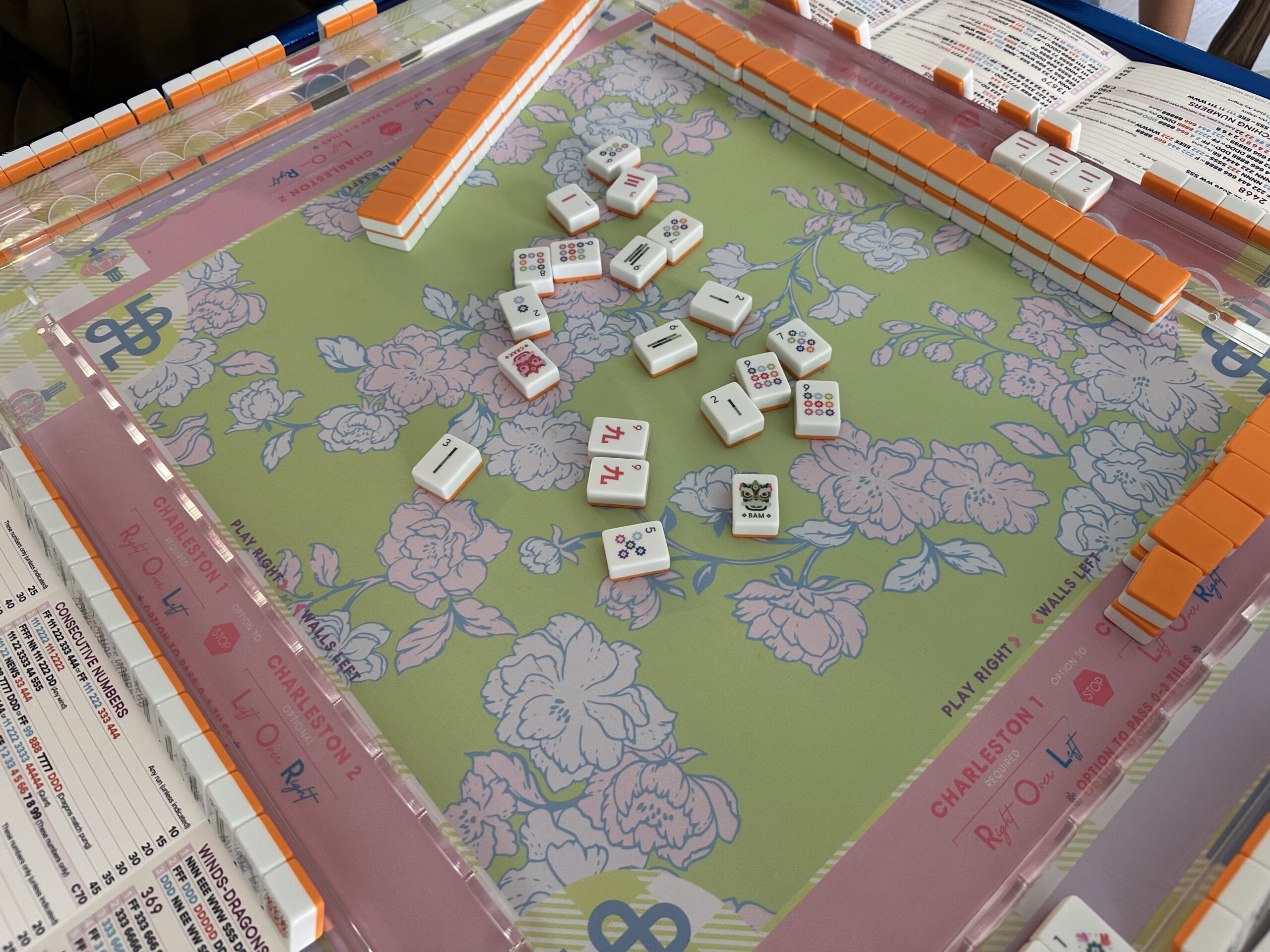
BAM! CRAK! DOT! MAHJONGG!
Lest you think I am speaking random words…
A Little History Lesson
During the Qing Dynasty, or the mid-19th century, a popular four-person tile game known as Chinese Mahjong developed. The name means “sparrow,” which is likely attributed to the clacking sound of the tiles (or chattering of the sparrows if you will) as players shuffle them on the table. Different regions of Asia have different rules and variations of gameplay.
In the early 1920s, Joseph Babcock, a civil engineer who traveled to China, learned to play Mahjong and created a simpler version of it in hopes of introducing the game and popularizing it in America (he coined the term ‘Mahjongg’ to indicate the difference between Chinese and American). In 1937, the National Mah Jongg League (NMJL) was formed in New York City by five Jewish women to standardize rules to further separate American Mahjongg from the traditional Chinese version.
The key differences between American Mahjongg and Chinese Mahjong are that American Mahjongg uses 152 tiles (8 of which are jokers that can represent any tile) while Chinese Mahjong uses only 144. In addition, the NMJL releases a card each year that changes the official winning hands, whereas in Chinese Mahjong, there is no card. I won’t describe the full gameplay for Mahjongg here because there are some nuances, but the general objective of the game is to make a winning hand per the NMJL card. And then you get to shout “MAHJONGG!” with a smile.
It would be remiss of me not to mention that, aside from the official NMJL card for hands, a few Mahjongg companies have created their own to spice things up a bit. Each player should be using the same cards as the others when playing the game.
Why is it so popular?
Mahjongg is a fabulous way to hang out with friends, make new ones, and it provides cognitive and mental stimulation (because who doesn’t need that?). You can choose to play socially or if you’re feeling competitive, sign up for a tournament. There are also Mahjongg trips and cruises you can take!
How I Got into Mahjongg
I learned how to play traditional Chinese Mahjong from friends many years ago. It wasn’t until recently, when more and more of my companions started picking up American Mahjongg, that I felt the desire to learn this variation. A sweet mom friend and I signed up for a class with an amazing instructor, and it was an instant connection that led to a constant desire to play (this sounds addictive, no?) I may have gotten a bit carried away and purchased my first set of Mahjongg tiles a few weeks later.
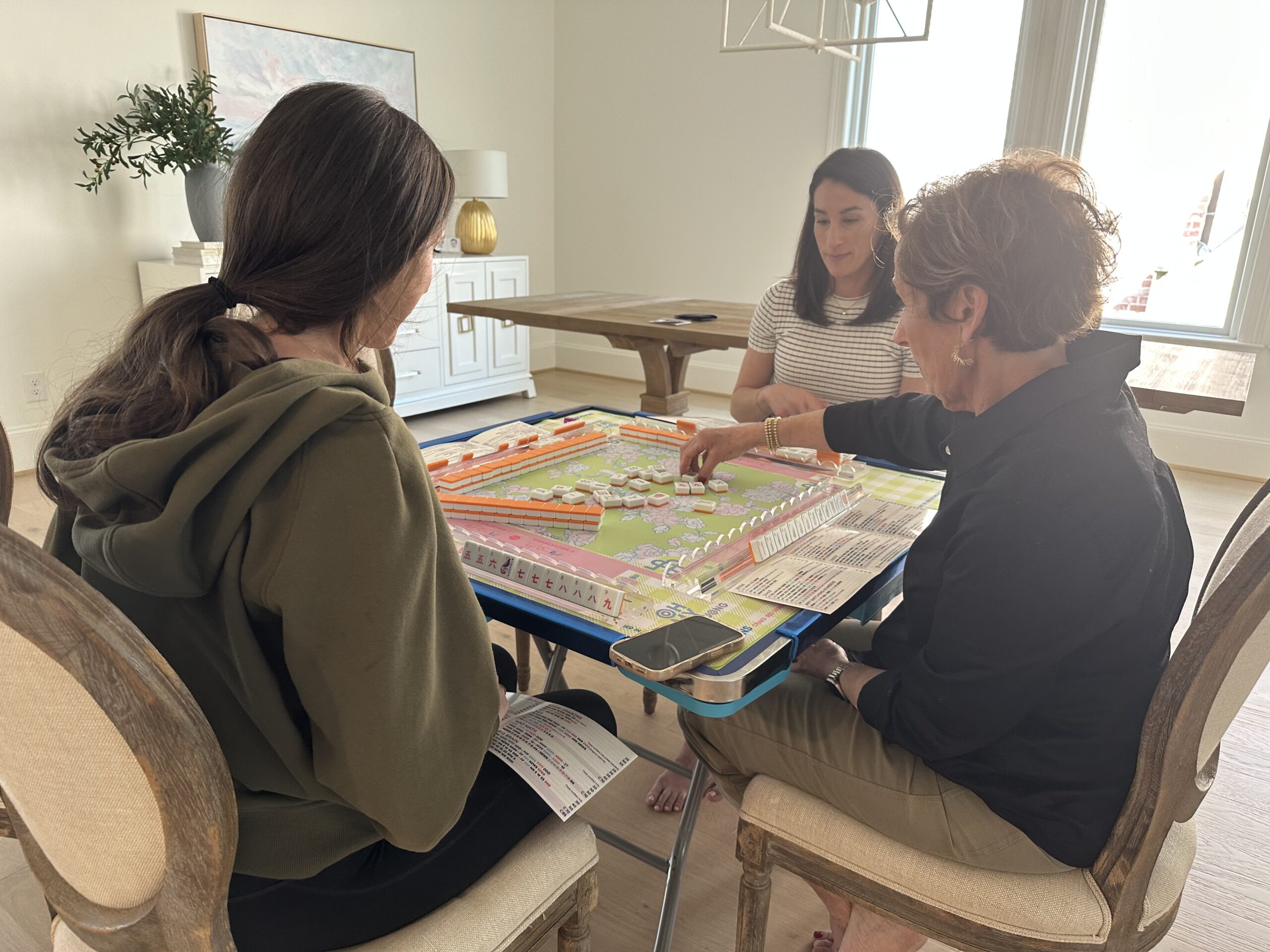
It has been great fun to incorporate Mahjongg into my social calendar and to have the opportunity to play with other moms and friends (this game is by no means gender specific). My daughter is also enjoying observing and participating during gameplay, so I think it’ll be another way for us to bond.
Ready to learn?
There are several instructors in Houston who offer group lessons, whether you’re a beginner or a more advanced player seeking additional strategic guidance. You can find a list of instructors for the Houston area (not all-inclusive) here: American Mahjongg Association
You can also find weekly games at:
Evelyn Rubenstein Jewish Community Center
Houston Congregation for Reform Judaism
In addition to these community centers and congregations, there are abundant open-play locations with varying dates and times throughout Houston and its surrounding areas. Unfortunately, there is no single database that will populate all the weekly events, so joining local Mahjongg Facebook groups is one of the ways you can be in the know.
More importantly, should we start a Readers of Real Houston Moms Mahjongg Group to coordinate additional local open play? Give us your thoughts!