





If your child grinds his or her teeth, struggles with behavior at school, suffers from attention issues, or is irritable in the mornings, it could be indicative of a deeper problem. These symptoms are all signs that your child may have an airway issue impeding the flow of oxygen during sleep – something called “sleep disordered breathing.” Yes, this is the same kind of sleep apnea adults with CPAP have. In children, it can have a dangerous impact on their growth and development- and poor sleep can have lifelong consequences! But there is a solution. Today, we’re bringing you everything you need to know about sleep disordered breathing and the five warning signs that your child is not getting enough quality sleep.
 As an Airway Dentist, Dr. Kalli Hale has spent her career helping children and adults with their sleep by making sure their jaws are growing properly and that they can breathe through their nose. If your child has very crowded teeth and is being told they need extractions or early braces, it means their jaws are too small! Before braces, the underdeveloped jaw must be treated to make room. Children need enough room for the tongue so they can breathe through the nose. When there isn’t enough room for them to breathe, they won’t get the quality sleep they need to restore, re-energize, and remember what they learned throughout the day.
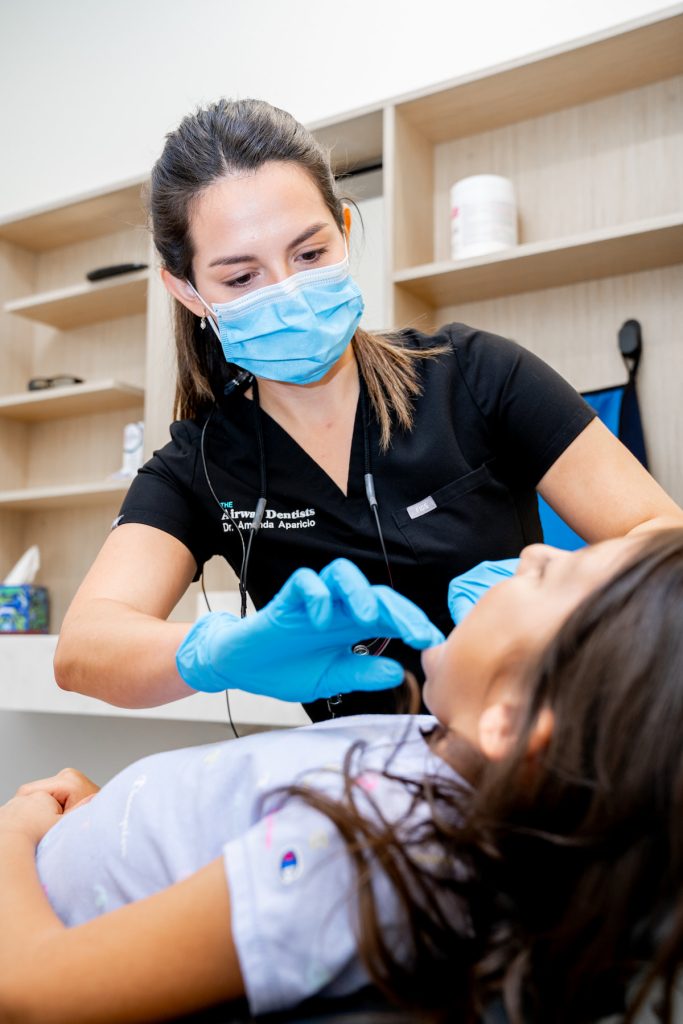 Here are the top 5 signs that your child may be struggling to breathe at night and needs to see a qualified Airway Dentist:
Snoring
As common as it seems, snoring is never normal. It is a sign that your child is getting less oxygen with each breath. This should never be ignored by a medical provider. If your child is snoring at night, it’s worth bringing it up to your pediatrician or making an appointment with The Airway Dentists to find a solution.
Teeth Grinding
This is a very common symptom parents report frequently and is a sign that your child has sleep disordered breathing. Children suffering from tooth grinding often need a nighttime guidance appliance to help them breathe through their nose and naturally grow their jaws.
Mouth Breathing
Many children suffer from swollen tonsils or adenoids and struggle to breathe through their nose. The typical recommendation is to remove the tonsils and adenoids, but at The Airway Dentists they have a proven approach to naturally shrink the tonsils and adenoids back to a normal size– with no surgery needed!
ADHD Symptoms
When children sleep poorly, their behavior throughout the day can mimic ADHD. It is imperative if your child is being told they have ADHD that they get a sleep study to rule out obstructive sleep apnea. When our children are constantly disturbed in their sleep from breathing issues, they suffer from poor sleep quality, which can manifest as difficulty focusing.
Bedwetting
Surprisingly to most families, your child’s bedwetting is likely to be from airway issues during sleep. A child’s inability to breathe through their nose can be severe enough that apneas occur (pauses in breathing) that affect the body’s exchange of oxygen throughout the night. This severe form of disordered breathing can cause children to wet the bed during sleep. If your child struggles with this symptom, look at their teeth. Are they crowded? Do they have an overbite? It is vital that they are screened for underdeveloped jaws and crooked teeth in our children who struggle with bedwetting, so the root cause can be treated.
Schedule Today
 If you suspect your child may have sleep disordered breathing, contact The Airway Dentists today for a consultation. Using advanced orthodontics, they can significantly improve your child’s oral and overall health through airway expansion. Nasal breathing and quality sleep are foundational at any age. Breathing powers everything!