





November is Alzheimer’s Awareness month. According to the 2025 Alzheimer’s Disease Facts and Figures, there are an estimated 7.2 million Americans, 65 years of age or older, who have Alzheimer’s today, which is projected to grow to 13.8 million by 2060, if no cure is discovered. Although less common, there is early-onset Alzheimer’s that affects people in their 40s or 50s.
 What is Alzheimer’s Disease?
Dementia is a general term to group together conditions that result in a decline in cognitive abilities that can impact a patient’s memory, thinking, and performance of daily activities such as dressing oneself, cooking, cleaning, driving, etc. Alzheimer’s disease is a form of dementia that’s caused by damage and destruction to nerve cells, or neurons, in the brain. Typically, the first neurons to be affected are those responsible for memory, language, and thinking. It is also a progressive disease, so the brain changes and symptoms that develop will worsen over time and vary between people.
What are the symptoms?
These complex brain changes typically occur about 20 years or more before individuals start exhibiting symptoms – some of which are:
- Memory loss (e.g., recalling recently learned information)
- Difficulty following a plan or concentrating (e.g., using a familiar recipe or tracking finances)
- Trouble with completing familiar tasks (e.g., driving to the same store they’ve been going to for years)
- Losing track of time and dates
- Difficulty with balance or reading
- Misjudging distance, color, and contrast
- Struggling with word finding or vocabulary (e.g., trouble naming familiar objects or using the wrong name for them)
- Misplacing things and losing the ability to retrace their steps
- Lack of grooming
- Becoming anti-social, withdrawn, suspicious, depressed, upset, or anxious
- Sundowning (e.g., increased confusion or agitation in the late afternoon hours)
How are they diagnosed?
Providers would need to obtain a good medical history, perform mental status tests, physical and neurological exams, and diagnostic brain imaging.
Risk Factors
The greatest known risk factor is increasing age, but it is not a direct cause of Alzheimer’s. After the age of 65, the risk of Alzheimer’s doubles every 5 years. Family history is another strong risk factor – i.e., someone who has a parent or sibling with Alzheimer’s is more likely to develop it. This risk also increases if more than one family member has the disease.
Other contributing risk factors, such as lack of sleep, smoking, history of head injuries, hypertension, or diabetes, can increase the risk of developing Alzheimer’s.
What can you do?
Incorporate activities that challenge your brain, learn a new skill, increase physical movement, quit smoking, eat healthy, maintain a healthy weight, and get quality sleep. These are all beneficial for brain health and can possibly reduce the risk of cognitive dysfunction and dementia.
Caregivers
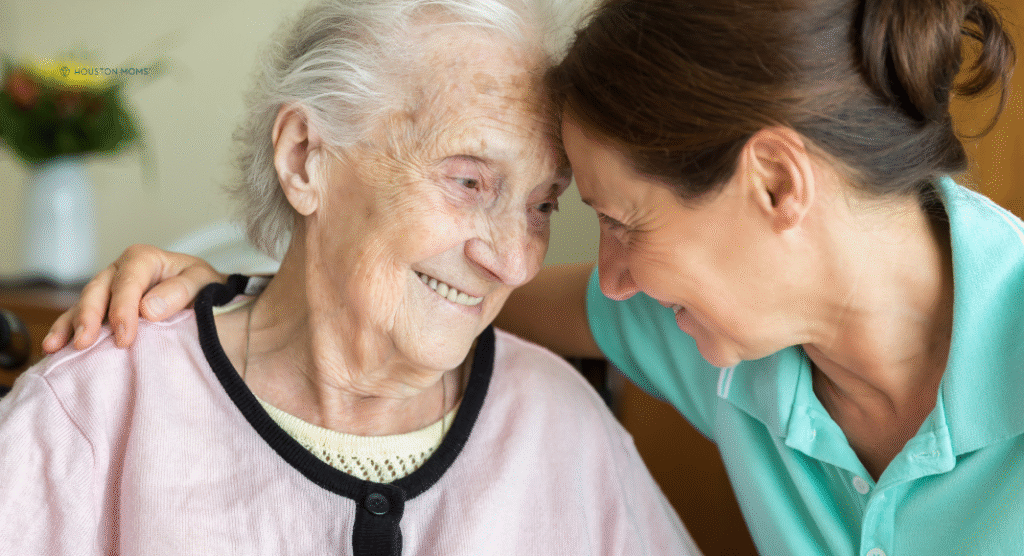
Besides being Alzheimer’s Awareness month, November is also National Family Caregivers Month to acknowledge the dedication and challenges of caregivers. In 2024, 12 million family members and/or unpaid caregivers provided approximately 19.2 billion hours of care to patients with dementia. It can be emotionally, physically, and mentally challenging to care for a loved one with Alzheimer’s. It is not just your parent, sibling, family member, or friend that could be struggling with this disease, but as a caregiver, you are as well. Please take the time to care for yourself and seek help and support from other family members and friends, as well as utilizing the resources available.
Author’s Note
I had the privilege of working as a traveling physician assistant to six skilled nursing and long-term care facilities prior to moving to Houston. As someone who had limited exposure to patients with dementia and/or Alzheimer’s disease, it was eye-opening. Some patients were aggressive and combative; others were calm but tended to wander, and some were anxious or confused, with many experiencing sundowning. It was difficult to provide quality care to and for these patients who had multiple comorbidities but lacked the cognitive awareness to know what we were requesting of them.
I could not imagine how hard it is to attempt to care for patients with Alzheimer’s at home, especially when we had help at the facilities. Aside from the physical nature of caring for these patients, it is hard to fathom how much heartache and mental exhaustion it must be for caregivers to see a loved one be tangibly present but also fading away at the same time. And for the patients to have fleeting moments of lucidity, only to dwindle back into confusion with on and off awareness. This is a horrible disease, and I want to express my heartfelt gratitude and appreciation to the caregivers. You are seen, and thank you so much for doing all you can, while you can, to help your loved ones.
Resources Available
The Alzheimer’s Association has a 24/7 Helpline: 800.272.3900. This is a free service that offers support for people living with dementia as well as their caregivers. They can provide local resources and crisis assistance as well as emotional support.
They also have a Houston and Southeast Texas Chapter with local support groups who meet in person for all stages of Alzheimer’s and for caregivers.
The National Institutes of Health (National Institute on Aging) has free publications that you can download on Alzheimer’s and dementia for education.
Houston is also home to the Nantz National Alzheimer Center, known for their research and referral center.
Alzheimer’s Texas, while based out of Central Texas, has a lot of virtual classes that may be beneficial to patients and caregivers.
References
2025 Alzheimer’s disease facts and figures. Alzheimers Dement. 2025;21(4):e70235. doi:10.1002/alz.70235