


You know the sound. Your kid rolls out of bed and cracks and pops from their neck to their ankles like a bowl of cereal. They wake up with their neck kinked to one side. They mention a headache they can’t explain and you catch yourself thinking, “Wait, aren’t they twelve? Weren’t we well into our forties before our bodies started doing this?”
If that’s your house, you are not imagining it and you are very much not alone.
I sat down with Dr. Alayna Pagnani-Gendron, a Houston chiropractor and the owner of HealthPro Family Chiropractic & Acupuncture, who has spent 15 years watching this exact thing get more common. Her specialty is pediatrics, and she’ll tell you plainly: kids shouldn’t be in pain. So when tweens and teens keep showing up achy, something’s going on. The good news is that most of it traces back to a handful of everyday habits and the fixes are things you can start before school even begins.
Consider this your back-to-school body reset. Bookmark it … because you’ll want it again in October when the backpack has somehow gained ten pounds.
 Start with the backpack {it’s the easy win}
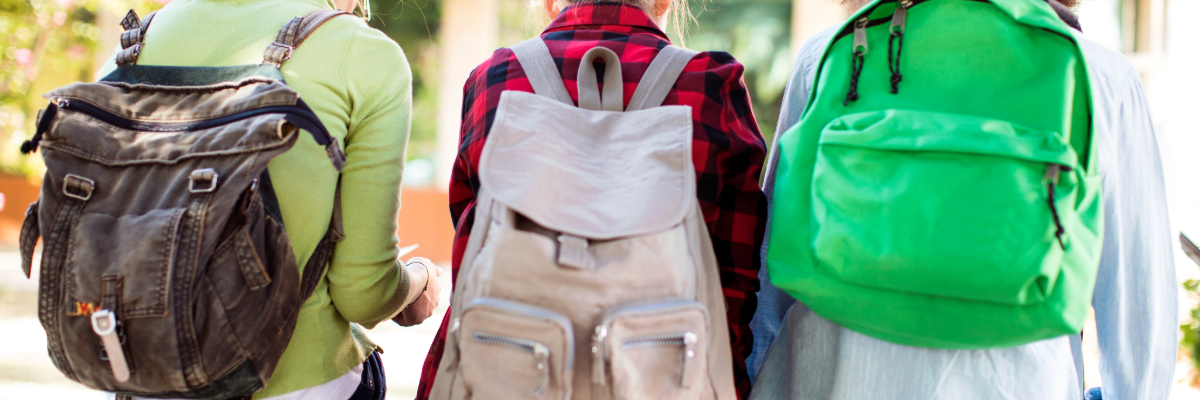
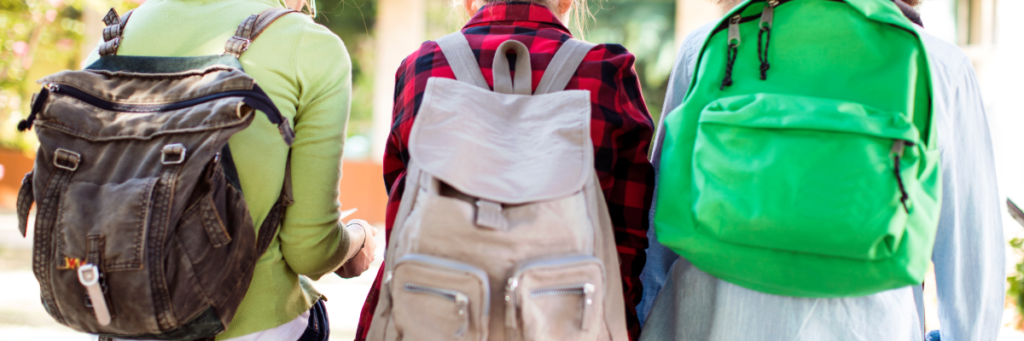
Let’s talk about the thing hanging off one shoulder by the front door. Dr. Pagnani says the weight kids haul around now is rough on a growing body and slinging it over a single shoulder only makes it worse.
Here’s the number worth taping inside the pantry door: the American Academy of Pediatrics says a loaded backpack should weigh no more than 10 to 15% of your child’s body weight and the research leans toward 10% as the safer target. For an 80-pound kid, that’s about 8 to 12 pounds, which disappears the second one textbook goes in. Easiest way to check? Set the packed bag on your bathroom scale.
When the number’s too high, Dr. Pagnani’s fixes are refreshingly doable:
- Use the locker. She calls this the big one. Swap books between classes instead of carrying the entire day around all day.
- Leave what you can at home. Half of this is organization: what do I actually need today?
- Both straps, always. And if no one’s watching on the walk home, buckle the waist strap too. It shifts the load off the shoulders.
- A roller backpack works in theory, though she’s the first to laugh that no high schooler on earth will be caught with one.
Her bottom line: small changes make a big difference. You don’t have to win every battle to lighten the load.
 Build a homework station that isn’t the couch
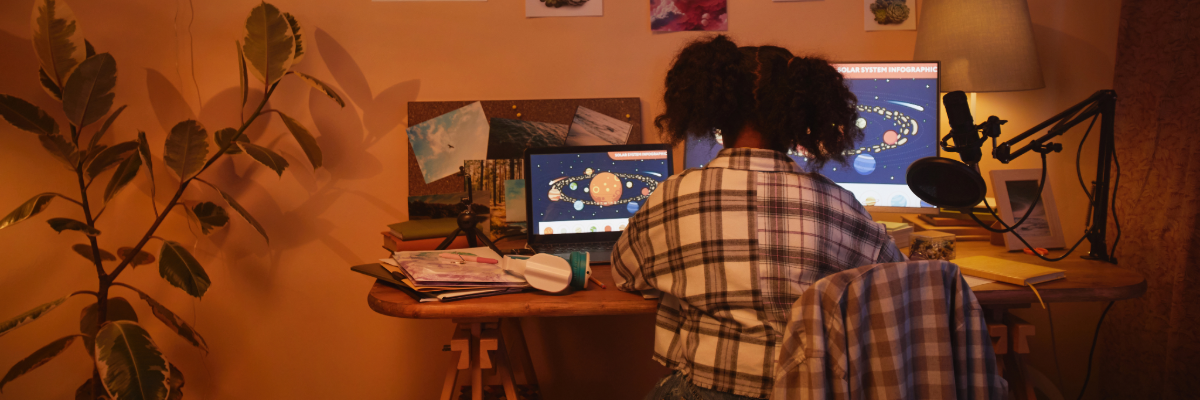
The shift Dr. Pagnani has seen most over 15 years is younger and younger kids coming in with neck pain, some so locked up they can’t turn their heads. A lot of it traces to what she calls anterior head carry: the head drifting forward over hours of looking down at a screen or a notebook. Our kids started young {iPads on the classroom floor in kindergarten, her own house included}, so by the teen years the body has spent years loading up stress it was never built to hold.
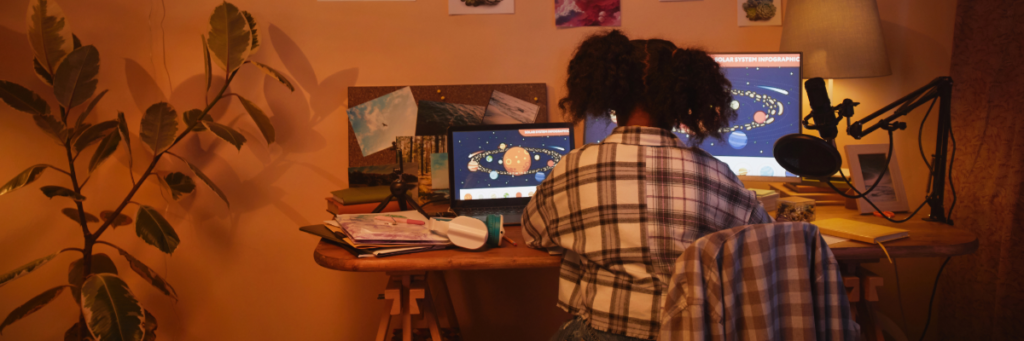
Two things help. First, give them a real spot to work that isn’t hunched over a phone in bed or curled sideways on the couch. Dr. Pagnani and her team sit on ball chairs at the office and she recommends them for kids too. {Search “ball desk chair,” the affordable kind on Amazon that comes with a little base.} Sitting on one quietly works the posture muscles without anyone realizing it’s happening.
Second, break up the sitting. Her rule at home is 45 minutes of work, then a short brain break to stand up and move. And every single day, some kind of body movement, whether that’s a sport, a bike ride, or a walk with a friend. Movement is the reset button.
 Reset sleep before the first bell

If your kid spent summer scrolling until 2am, now’s the moment to walk it back. Dr. Pagnani is candid that this one gets harder the older they get. With a younger kid, you can take the phone, shut it off, and be the “bad parent,” and that’s fine. Once they’re 18 and it’s their phone, you’re mostly having conversations and hoping the natural consequence {feeling wrecked at 7am} does the teaching for you.
Her real advice is to establish the patterns early before the habit sets. The link she wants kids to feel in their own bodies is simple: scroll till 2am, wake at 7am, drag through the whole day. Said that plainly, it lands better than a lecture ever will.
 Growing pains or something worth a closer look?
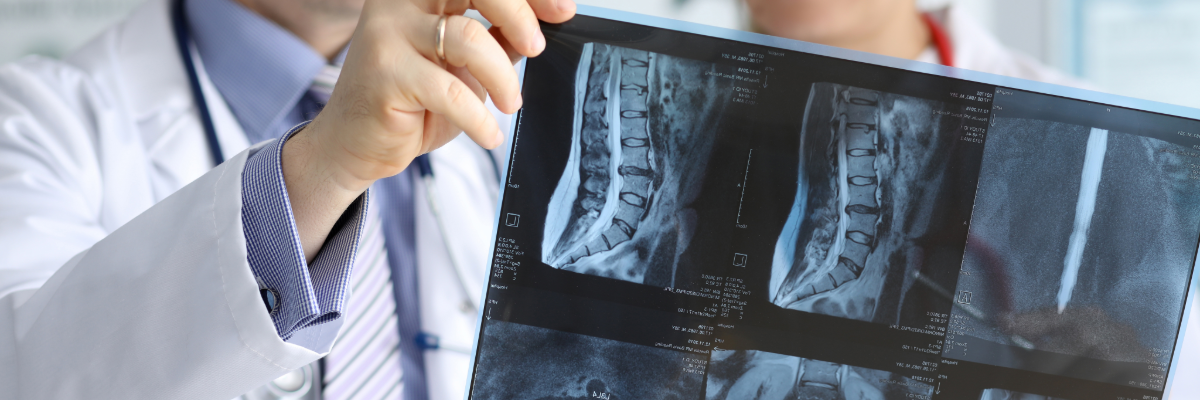
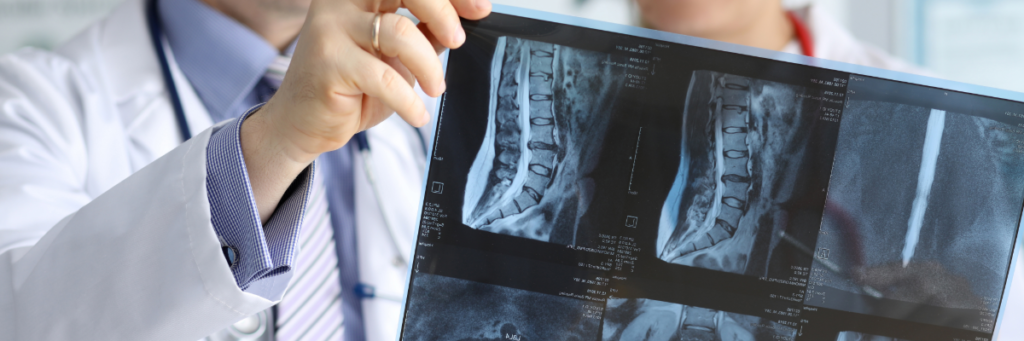
Not every ache needs a doctor and Dr. Pagnani has a quick gut-check for telling the difference. Growing pains tend to show up at night, feel like a dull ache in the joints, and come and go rather than sticking around. She also runs through a few questions: Have they been eating more? Sleeping more? Are their clothes suddenly getting tight? If the aches line up with a growth spurt, she leans on the basics, making sure they’re well hydrated and, in some cases, adding magnesium.
If the pain doesn’t fit that pattern {it’s constant, it’s in one spot, it won’t budge}, that’s her cue to look further. Trust your read here. You know when something’s off with your kid.
 The part nobody warns you about: stress lives in the body
Here’s the one that surprised us most. Dr. Pagnani is seeing kids stressed to a degree she says she can hardly believe, showing up with anxiety, with focus that falls apart, and with the kind of sensory overload where so much is coming in at once that the body just … stops. The paper’s due, the form’s unfilled, and your kid can’t make themselves start. It reads like a discipline problem. She says it’s very often a nervous system running on empty.
One tool you can hand them today is box breathing. Breathe in for four, hold for four, out for four, hold for four. Dr. Pagnani explains that a deep breath works the diaphragm, which connects to the vagus nerve, which is the switch that moves the body out of fight-or-flight and into calm. It’s free, it’s portable, and it works in a school bathroom two minutes before a test.
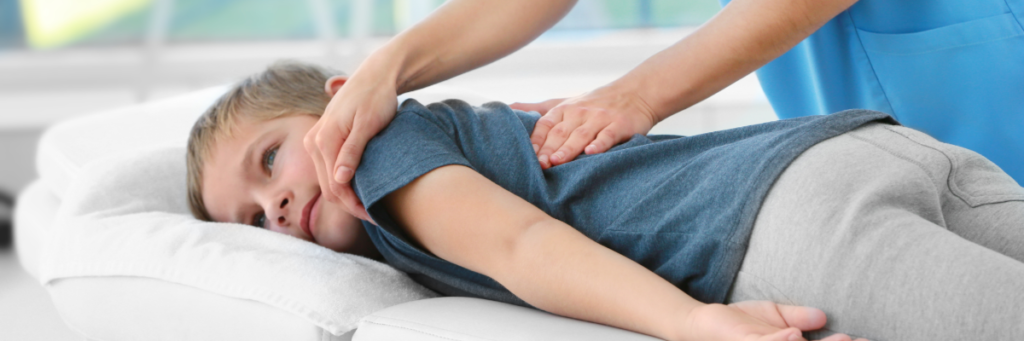
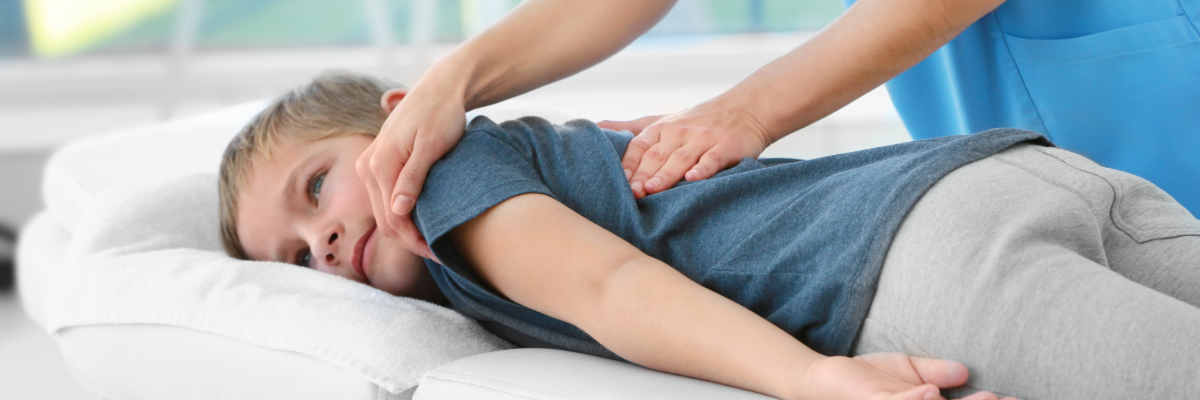
From a chiropractic standpoint, Dr. Pagnani says regular adjustments help the nervous system regulate and adapt to all of this, easing kids out of that constant stress state and into something calmer. That’s her professional approach, and she’s happy to walk any family through whether it’s a fit. What she won’t budge on is the bigger idea: we can’t erase our kids’ stress, so the real work is teaching them to carry it. Boundaries, honest communication, and actual self-care are the skills that stick.
Meet Dr. Pagnani {and hear a whole lot more}
Dr. Alayna Pagnani-Gendron is certified in pregnancy and pediatric chiropractic, holds her C.A.C.C.P. certification through the Academy Council of Chiropractic Pediatrics, and recently completed FOCUS Academy training in brain-based care for neurodivergent kids. You can find her at HealthPro Family Chiropractic & Acupuncture in Houston, at healthprochiro.com, or on Instagram at @dralaynapagnani.
And here’s the part we’re most excited about: Dr. Pagnani is our very first guest on Houston Moms in the Middle, our brand-new podcast for the tween, teen, and young-adult years. It launches Aug. 5 and she goes even deeper on the stress-and-resilience side of all this. Follow along so you don’t miss it.